
Back to Blog

Florida HOA Laws Are Changing — What Landlords Need to Know

Florida's HOA laws have shifted toward transparency and accountability. Here's what changed, what failed in 2026, and the rental restrictions landlords must check before buying into an HOA.

By Florida Landlord Network
August 17, 20266 min read
HOAhomeowners associationChapter 720HB 1203rental restrictions
Florida HOA Laws Are Changing — What Landlords Need to Know

Florida has significantly changed the rules governing homeowners' associations in recent years. For landlords who own rental property within an HOA, those changes matter.

The trend is clear: greater transparency, more accountability for HOA boards, and additional protections for individual property owners.

At the same time, Florida lawmakers continue considering even broader HOA reforms. Several major proposals surfaced during the 2026 legislative session but did not become law.

Here's where Florida law stands today—and what landlords should be watching.

Florida's HOA Law

Most Florida homeowners' associations are governed by Chapter 720, Florida Statutes, commonly known as the Florida Homeowners' Association Act.

The Legislature substantially revised Chapter 720 through HB 1203, effective July 1, 2024. Some compliance requirements continued to become relevant during 2025 and 2026. The changes represent one of Florida's most significant HOA reforms in years.

Mandatory Education for HOA Directors

Florida now requires HOA directors to complete approved educational training. Previously, directors generally could certify that they had read the association's governing documents and agreed to uphold them. The newer law establishes actual education requirements, including training concerning:

  • HOA operations
  • Financial responsibilities
  • Recordkeeping
  • Meetings
  • Elections
  • Director responsibilities
  • Florida HOA law

The objective is straightforward: people exercising significant authority over their neighbors' property should understand the laws governing that authority.

Owners Have Greater Access to HOA Records

Florida has also strengthened homeowners' rights to inspect association records. HOAs must maintain numerous official records and make qualifying records available for inspection by owners. The law imposes consequences when association officials improperly withhold, destroy, conceal or manipulate records. For larger associations, Florida has gone even further.

Online HOA Records

HOAs containing 100 or more parcels are subject to requirements involving posting specified association records on a website or mobile application. Depending upon the association and document involved, owners may have electronic access to items such as:

  • Governing documents
  • Amendments
  • Rules
  • Budgets
  • Financial reports
  • Contracts
  • Meeting notices
  • Other required association records

For rental-property owners who may not live in the community, electronic access can be particularly valuable.

Architectural Committees Have Limits

Architectural review has historically been one of the greatest sources of HOA disputes. Florida law now places additional restrictions on how associations administer architectural and construction standards. An HOA cannot simply enforce architectural requirements arbitrarily. Decisions must comply with the association's governing documents and Florida law.

This becomes important when an investor purchases a property intending to make improvements before placing it on the rental market.

Restrictions on What HOAs Can Regulate

Florida has also restricted HOA authority over certain uses and improvements on an owner's property. Depending upon the circumstances, statutory protections may affect HOA regulation of such things as:

  • Vegetable gardens
  • Clotheslines
  • HVAC equipment
  • Certain parking situations
  • Property improvements
  • Areas that are not visible from neighboring parcels, common areas or community roads

The exact rule depends upon the particular issue, the association's governing documents and Florida law. Landlords should therefore avoid assuming that an HOA rule is enforceable merely because it appears in the association's rules.

HOA Fines Require Procedure

Associations retain considerable enforcement authority, including the ability to levy fines in appropriate circumstances. But that authority isn't unlimited.

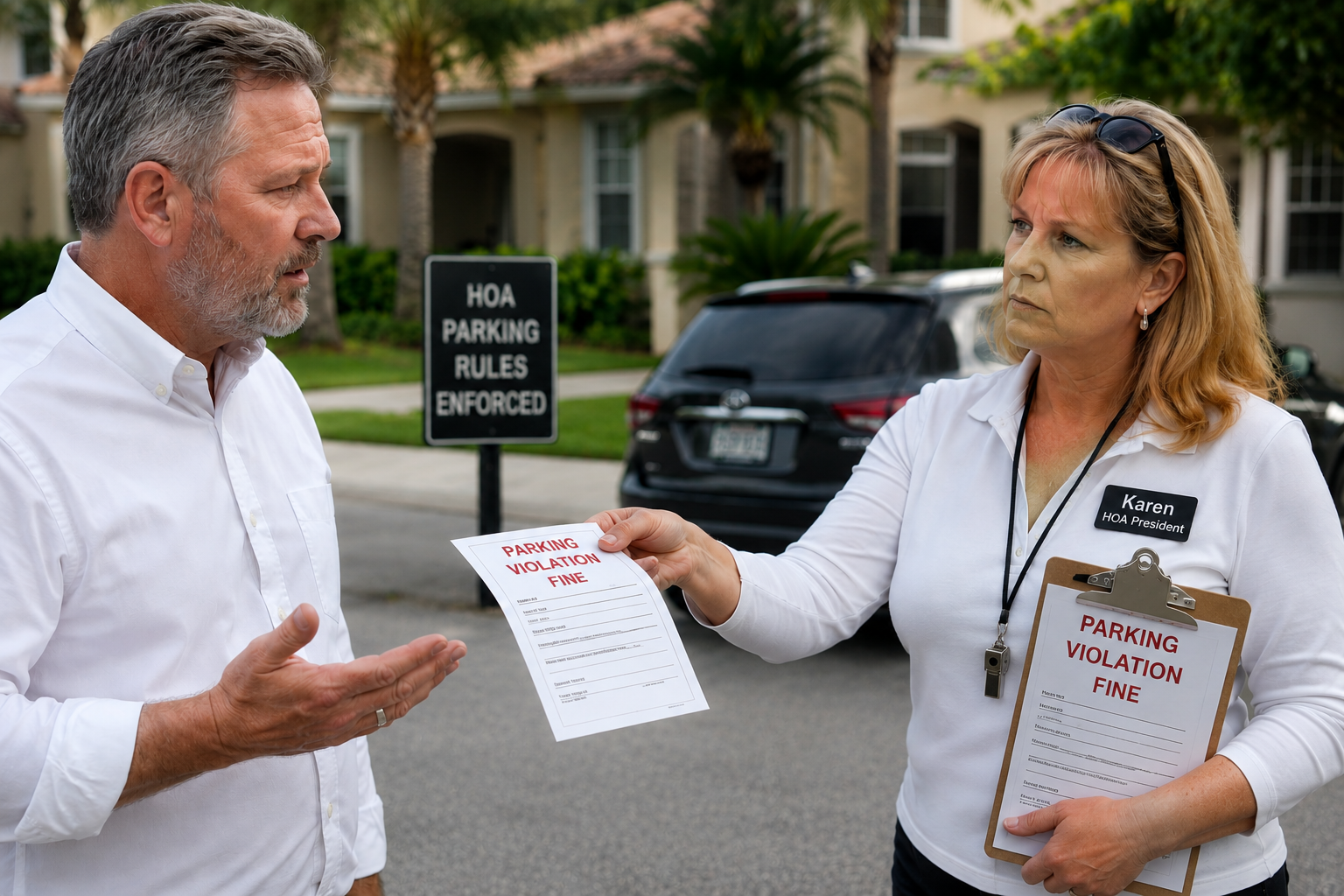
Florida law establishes notice, hearing and procedural requirements that associations generally must follow before imposing fines or suspending certain rights. For landlords, this is particularly important when the alleged violation was actually committed by a tenant.

An owner receiving an HOA violation notice should address it promptly rather than simply forwarding it to the tenant and assuming the matter has been resolved. The association's enforcement action is generally directed toward the property owner.

Delinquent Assessments and Interest

Florida law also changed how associations may handle delinquent assessments.

One important protection is the prohibition against compound interest on delinquent assessments.

That does not mean owners can ignore HOA assessments. Associations continue to possess powerful collection remedies, potentially including liens and foreclosure.

Landlords should treat HOA assessment notices with the same seriousness they would property-tax or mortgage notices.


Florida Landlord Network — Evictions Done Right. Done Fast. Flat fee starting at $395.00. Call 800-809-1530. FLALandlord.com. Statewide coverage.

The 2026 Legislature Considered Going Much Further

Florida lawmakers considered another round of substantial HOA reforms during the 2026 legislative session. One of the most significant proposals was HB 657. Among other provisions considered during the legislative process were changes involving HOA termination or dissolution, dispute resolution, official records and association governance.

HB 657 did not become law. It died during the 2026 legislative session. Other significant HOA proposals also failed.

HOA Ombudsman

SB 906 proposed creating an Office of the Homeowners' Association Ombudsman within the Florida Department of Business and Professional Regulation. That could have represented a major expansion of direct state involvement in HOA disputes.

The bill did not pass.

Mandatory Professional Management

HB 465 proposed professional-management requirements affecting certain community associations.

It did not become law.

HOA Roofing Restrictions

SB 924 proposed additional restrictions on HOA authority concerning roofing materials.

It also failed.

This distinction matters. Articles, social-media posts and HOA websites frequently discuss legislation while it is moving through Tallahassee. Months later, those discussions can continue circulating online even though the legislation never became law.

Always distinguish between a bill that was introduced and a law that actually passed.

The Bigger Issue for Landlords: Rentals

For rental-property owners, the most important HOA issue often isn't board elections or architectural committees. It's the association's authority over renting the property.

Before purchasing or leasing property within an HOA, landlords should determine whether the governing documents contain restrictions involving:

  • Minimum lease terms
  • Maximum number of rentals
  • Waiting periods before an owner may rent
  • Tenant applications
  • Tenant background screening
  • Association approval of tenants
  • Application or processing fees
  • Occupancy restrictions
  • Parking and vehicle restrictions
  • Lease-registration requirements
  • Tenant conduct
  • Short-term rentals
  • Required lease provisions

These restrictions can materially affect the economics of an investment property. A beautiful rental property isn't much of an investment if you discover after closing that the association prohibits you from renting it for the next twelve months.

Don't Stop at the HOA Rules

There is another important distinction. An HOA may have several layers of governing authority:

  1. Florida statutes
  2. Declaration of covenants and restrictions
  3. Articles of incorporation
  4. Bylaws
  5. Rules and regulations
  6. Board policies and procedures

These documents don't necessarily have equal legal authority. A board-adopted rule cannot automatically override the declaration—or Florida law.

When a significant rental restriction or enforcement issue arises, landlords should identify where the restriction actually comes from, rather than relying solely upon a property manager's email or a summary contained on an HOA website.

Before Buying an HOA Rental

An investor considering property within an HOA should obtain and review the association documents before becoming obligated to purchase whenever possible. Pay particular attention to rental restrictions.

Ask a very simple question: "If I buy this property today, exactly when can I rent it, to whom can I rent it, and what approval does the association require?"

Get the answer from the governing documents—not merely from the seller or real-estate agent.

Paul's Take

Paul's Take

Florida's HOA laws have changed considerably, and I think the direction coming out of Tallahassee is pretty obvious. The Legislature appears increasingly uncomfortable with associations exercising broad authority over people's homes without transparency, accountability and reasonable limitations.

For landlords, though, I would focus on something even more basic.

Read the HOA documents before you buy the property.

I've seen investors spend hundreds of thousands of dollars on a rental property and devote more time to examining the roof than examining the HOA restrictions. The roof can usually be fixed. A recorded restriction preventing you from renting the property may be a much bigger problem.

And never assume something is Florida law simply because somebody says, "The HOA says we have to do it." Find out whether the requirement comes from Florida law, the declaration, the bylaws—or simply a rule adopted by the board.

Disclaimer: Florida Landlord Network is a non-attorney service. This article is for informational purposes only and does not constitute legal advice. Consult a licensed Florida attorney for guidance specific to your situation.

Stay Informed

Get Florida landlord news and legal updates by email.

We use your email to send you our newsletter. See our Privacy Policy. Unsubscribe at any time.

Comments

Comment submission is temporarily unavailable while we review our moderation process.

Important Notice: Florida Landlord Network is an independent, non-attorney service. We urge you to consult an attorney before relying on any publication, using any document or described procedure found herein. Florida Landlord Network is not licensed by the Florida Bar to practice law and is not authorized to give legal advice or tell you your legal rights.