
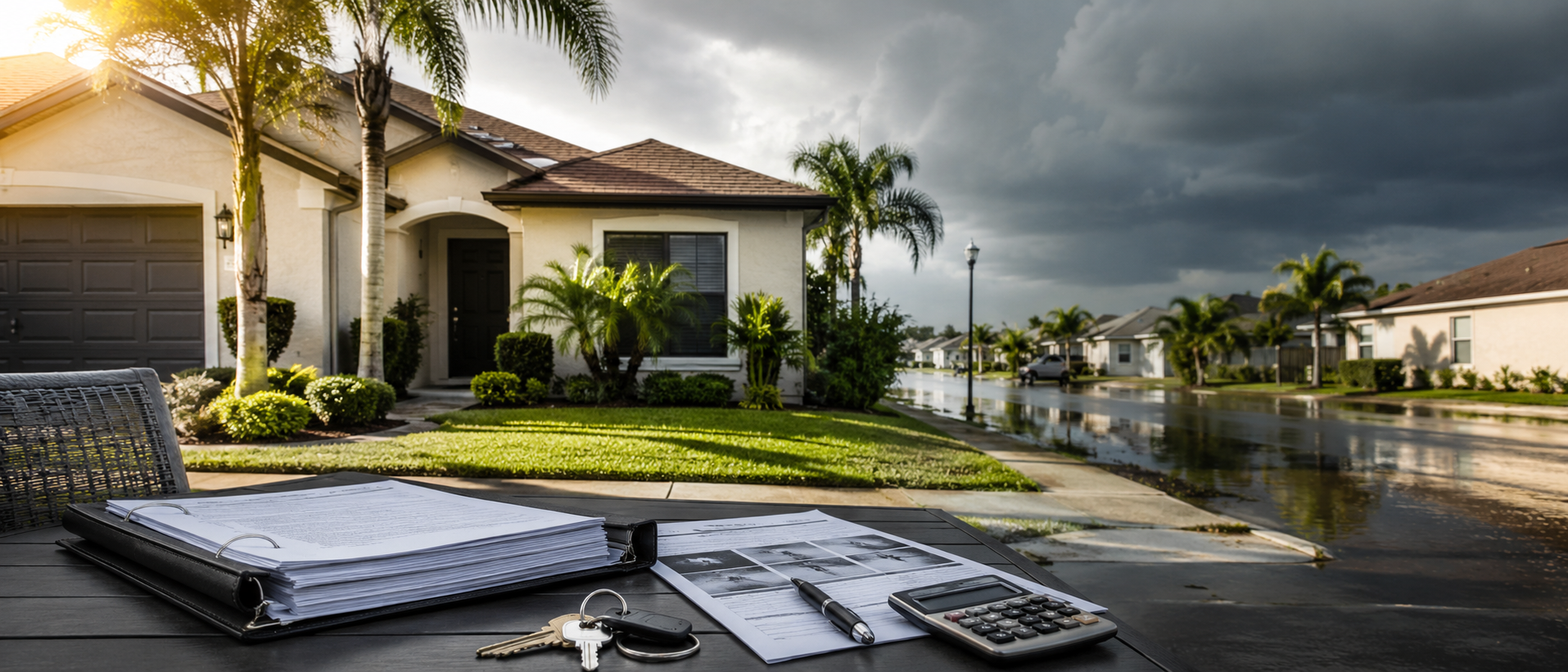
Twenty new property and casualty insurers have entered Florida since the state enacted major insurance reforms, giving property owners more options after years of steep premiums, carrier failures and shrinking coverage.
Florida's troubled property insurance market appears to be moving away from crisis-level instability and into a period of cautious stabilization.
In May 2026, the Florida Office of Insurance Regulation announced that 20 new property and casualty insurers had entered the state since the enactment of recent legislative reforms. Florida's domestic property insurers have also returned to profitability, reporting $944 million in net income for 2024, compared with $292 million in 2023 and a combined $741 million loss in 2022.
The increased capacity does not mean Florida insurance has suddenly become inexpensive or easy to obtain. Coastal exposure, hurricanes, reinsurance costs, roof condition and property age continue to affect premiums and eligibility. Nevertheless, more carriers competing for business could gradually provide landlords with additional coverage choices.
The Florida Office of Insurance Regulation describes the current market as stabilizing—but rental owners should not mistake stabilization for safety.
The Flood Gap Remains a Major Risk
One of the greatest exposures facing Florida landlords is the "flood gap."
A conventional landlord policy—including many DP-3 policies—generally covers wind damage but excludes flooding caused by rising water, storm surge and water moving across the ground.
That distinction becomes critical following a hurricane. A policy may cover damage caused when wind tears off a roof and rain enters the building, while excluding water damage caused when storm surge enters through the doors.
The result can be two properties damaged during the same storm—with completely different insurance outcomes.
Landlords should not assume a property is safe simply because it is outside a high-risk FEMA flood zone. Heavy rainfall, overwhelmed drainage systems, overflowing retention ponds and changing development patterns can produce flooding far outside traditional coastal hazard areas.
Citizens Expands Its Flood Requirement
Effective January 1, 2026, most new and renewing Citizens personal residential policies that include wind coverage must be accompanied by separate flood insurance when the structure has a dwelling replacement cost of $400,000 or more.
The requirement applies regardless of whether the property is located within a FEMA Special Flood Hazard Area.
Citizens' flood requirement has been phased in according to replacement cost:
- $600,000 or more beginning in 2024
- $500,000 or more beginning in 2025
- $400,000 or more beginning in 2026
- Most remaining qualifying personal residential policies beginning in 2027
Properties in designated Special Flood Hazard Areas have already been subject to separate requirements. Policies without wind coverage and condominium unit-owner policies are among the statutory exceptions.
Citizens does not ordinarily provide the flood coverage itself. The policyholder must obtain qualifying coverage through the National Flood Insurance Program or an eligible private flood insurer.
Details are available through Citizens' flood insurance guidance.
Even when flood insurance is not mandatory, a landlord should evaluate whether it is financially necessary. A lender's decision not to require flood insurance does not mean the property cannot flood.