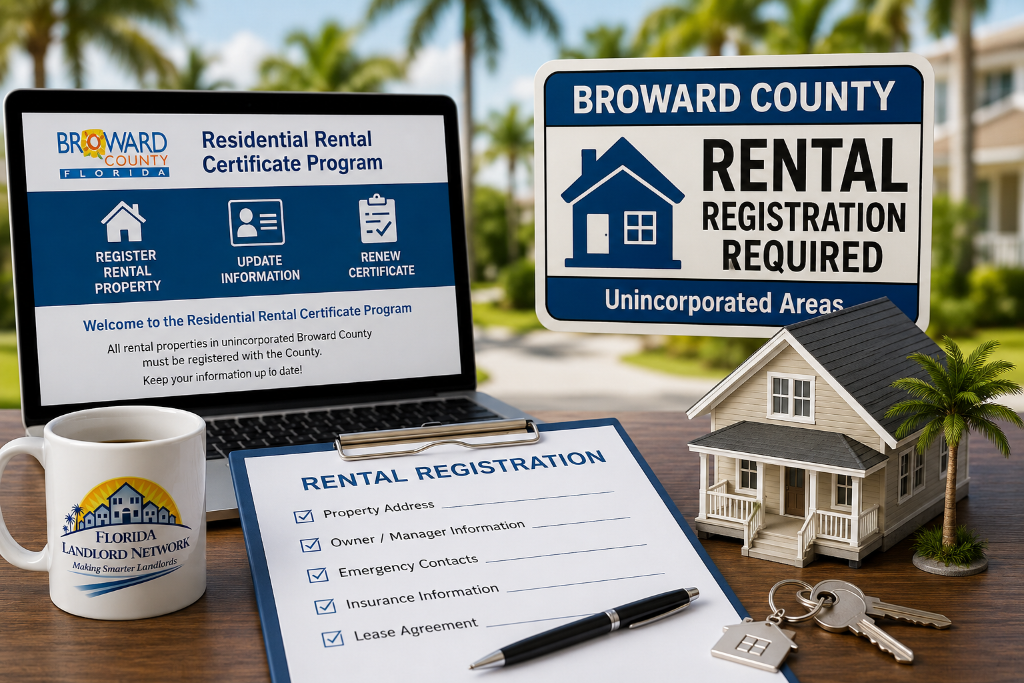
Landlords who own rental property in unincorporated Broward County should make sure their properties are properly registered with the county's Residential Rental Certificate Program. The program is designed to improve communication between landlords and county officials while helping address housing code violations and emergency situations more efficiently.
Unlike many local rental registration ordinances around the country, Broward's program primarily serves as a landlord registration and contact database rather than a rent-control or tenant screening program. County officials say the registry allows code enforcement personnel to quickly identify and contact property owners when health, safety, or maintenance issues arise.
When registering a rental property, owners are generally required to provide:
- Property address and rental unit information
- Owner or property manager contact information
- Emergency contact information
- Additional ownership and property details requested by the county
Keeping this information current is important so county officials can respond quickly when emergencies or code enforcement issues occur.
Recent Change Benefits Landlords
In a move welcomed by many property owners, Broward County recently eliminated the annual renewal fee associated with the Residential Rental Certificate Program. While registration is still required, removing the recurring fee reduces the administrative cost of compliance.
Why Registration Matters
Failure to comply with local registration requirements can expose landlords to enforcement actions and civil penalties. More importantly, keeping registration current helps avoid unnecessary delays if county officials need to contact an owner during an emergency, investigate housing complaints, or address life-safety issues affecting tenants.
Rental registration programs continue to spread across Florida as local governments seek better information about rental housing. While Broward County's program is currently limited to properties in unincorporated areas, landlords should remain alert for similar proposals in other counties and municipalities.

Rental registration is becoming more common throughout Florida. While programs like Broward County's are generally presented as tools for code enforcement and emergency communications, landlords should pay close attention whenever local governments begin collecting information about rental properties.
History has shown that registration programs can gradually expand to include inspections, licensing, fees, reporting requirements, and additional regulations. Staying informed and participating in the public process early gives landlords the best opportunity to influence these programs before they become more burdensome.